Uncovering Customer Trends from Payment Data

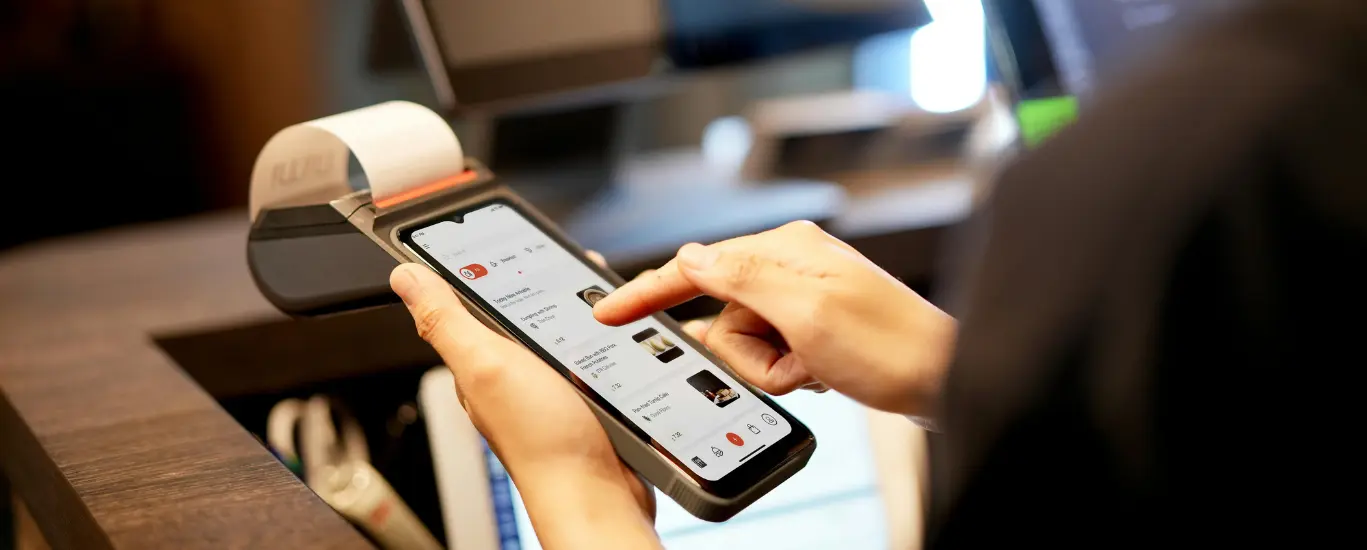
There’s a backstory behind every transaction in today’s networked economy. Each time a customer makes a payment for a good or service, they leave behind a data trail of when the purchase was made, how they paid and what product or service they chose to buy, along with the frequency of repeat business. Technology leaders consider this data as a strategic weapon that can be used to change the way companies look at and interact with their customers. It is not only a record of payments.
The Power of Payment Data
What customers spend is among the most stable and dependable ways to measure what they do. Unlike survey replies or social media interactions, it represents a real action. Companies can analyze payment trends to which customers are responding and forecast sales by drilling down into the data, such as fine-tuning payment by pricing and promotions.For instance, categorizing repeat purchases can uncover which products are building loyalty and recording high-value sales can find which types of customers are high-end. Seasonal shifts in spending can also reveal when shoppers are feeling particularly amenable to offers.Payment data analytics-enabling tech platforms can help businesses make sense of these insights and translate them into strategies that boost revenue, retention, and experience.
How Analytics Uncover Customer Patterns
Modern payment systems generate enormous volumes of structured and unstructured data, including transaction values, payment methods, geolocation, time stamps, and more. This data can be utilized to create predictive insights when paired with machine learning and artificial intelligence models.Here’s how organizations are putting it to use:
- Personalized Offers and Loyalty Programs: Analytics-driven knowledge can be used for businesses to grant personalized offers based on real purchase behavior. For example, a fintech company can suggest products that align with a customer’s payment behavior. These insights are something retailers can learn from in regard to tweaking their loyalty programs so that rewards do indeed mirror what customers really care about.
- Fraud Detection and Risk Management: Although the analytics of payment data are essential for marketing, they’re also necessary to protect ourselves. By detecting suspicious patterns on the fly with learning models, these banks and fintech companies can prevent spurious purchases before they occur. This capability helps financial services firms maintain customer trust and meet regulatory obligations.
- Anticipating the Market Trend: Payment patterns can be used as a leading indicator of shifts in consumer behavior. Aggregate and anonymize that data, and it could be used to clue in on macroeconomic signals, like changes or trends in discretionary spending or the adoption of digital wallets. Companies can use such signals to make changes in inventory, marketing campaigns, and even product development roadmaps.
- Operational Efficiency: From transaction patterns, businesses can pinpoint gummed-up payment flows or checkout in general. Improvements here directly improve the customer journey and can decrease payment failure, which is one of e-commerce’s most significant drivers of cart abandonment.
Balancing Personalization and Privacy
Great responsibility accompanies great understanding. That same data that enables customization can be treacherous if not handled right. Whoever has the authority to decide should ensure that the data analysis methodologies comply with international privacy laws like CCPA, GDPR, and India’s DPDP Act.In data-centric businesses, privacy-by-design is increasingly becoming the standard. This includes using consent-based data acquisition methods, as well as data encryption and anonymization. They can also build more trust with customers and keep regulators happy by being transparent about how they use customer information.Moreover, organizations are increasingly relying on data governance frameworks to define the responsibilities of teams, owners, and access rights. These systems ensure that an analytics task is directed, protected, and ethical.
Combining Payment Analytics With Business Strategy
To be valuable, payment data analytics needs to fit into the larger business landscape. This means integrating payments data with your CRM, ERPs or customer experience solutions. Together, they produce a holistic customer view that speeds decision-making and increases responsiveness.One of the prime examples is extending predictive analytics to customer service. Companies can be proactive in contacting customers to avoid or lessen churn by predicting potential payment issues or drop-offs. In B2B settings, payment cycle intelligence can also be used to forecast cash flow and optimize supplier relationships.Cloud-based analytics is driving this change by providing scale and security. They enable organizations to handle billions of transactions immediately, produce instant analysis, and securely share that knowledge across the organization.
The Role of Emerging Technologies
New technology is also allowing for better capture and use of payment data. With blockchain, you have traceability, and fraud is being reduced to a lesser extent; the transactions are more transparent. Edge computing accelerates payment processing at the source by cutting latency and reducing reaction times.Meanwhile, advances in AI continue to set new levels for what is possible. Unstructured data, such as transaction narratives, can be processed by natural language processing, while deep learning models may discover more subtle relationships that traditional approaches would miss.These technologies are enhancing human decision-making, not replacing the human being. It’s becoming a cliche that the future of decision-making will be human expertise combined with machine intelligence, and it may be old news.
Looking Ahead
Payment data analytics is no longer for FIs only. Retailers, telecom companies, travel platforms and even health care providers would all be able to capitalize on it.The trick is utilizing data responsibly to drive the right results. By using payment data as a strategic asset, businesses can expand beyond processing transactions and into the realm of knowing customers better. This insight fuels more thoughtful experiences, deeper loyalty, and smarter expansion.In a market disrupted by ever-widening customer expectations, those who act based on real data - not just assumptions - win. Payment data analytics offers that clarity, leveraging every transaction as the possibility to learn, adjust, and cater in the future.